

Finding Your Voice: How One Mother’s Testimony Helped Change Virginia Law
By Karin Boxer*
A visibly nervous Roshay Richardson stepped up to the podium, cradling her infant son in her arms. She and her husband left their house in Danville at 4:30 a.m. to make the three-hour drive to Richmond so she could testify before the Virginia House of Delegates’ Subcommittee on Health Professions on January 23, 2024.
(Video of Roshay’s testimony)
Roshay’s message was simple but powerful, “When you are pregnant…the last thing you should be worrying about is where you’re going to give birth to your baby. That should just be a no-brainer…and to have a closure due to the fact that you don’t have a provider to give newborn care when there are people in our community that are qualified to do that job… I just can’t wrap my head around why that’s a thing… and this just seems like such a simple solution to me.”
This solution was House Bill 1904, drafted by Kathryn Haines, health equity manager at the Virginia Interfaith Center for Public Policy (VICPP). The bill was written in response to a crisis at Sovah Health’s Danville hospital when it was forced to temporarily close its nursery, labor, and delivery unit because the pediatrician on-call experienced a medical emergency and back-up was not available. HB 1904 would address access to care issues by allowing certified nurse midwives, certified midwives, or pediatric nurse practitioners to be included on the 24-hour on-call roster for nursery care in hospitals that provide general level newborn nursery services.
Under current Virginia law, hospitals must have a pediatrician listed on an on-call roster and available within 30 minutes to keep these units open. Given the difficulty of attracting doctors to rural areas, no other pediatrician was available. Any woman arriving in labor would have to be diverted to a hospital 90 minutes away—even though local midwives were qualified and available to provide care.
Roshay was stunned when she learned about the closure. As a doula who had worked with midwives, she knew newborn care falls within midwives’ scope of practice. She said, “It just didn’t make sense to me: like, y’all are closing the whole unit and going to make people be without care because you don’t have a pediatrician, even though we do have midwives who could have offered that same care and are qualified to offer that care? Yeah, it just blew my mind.”
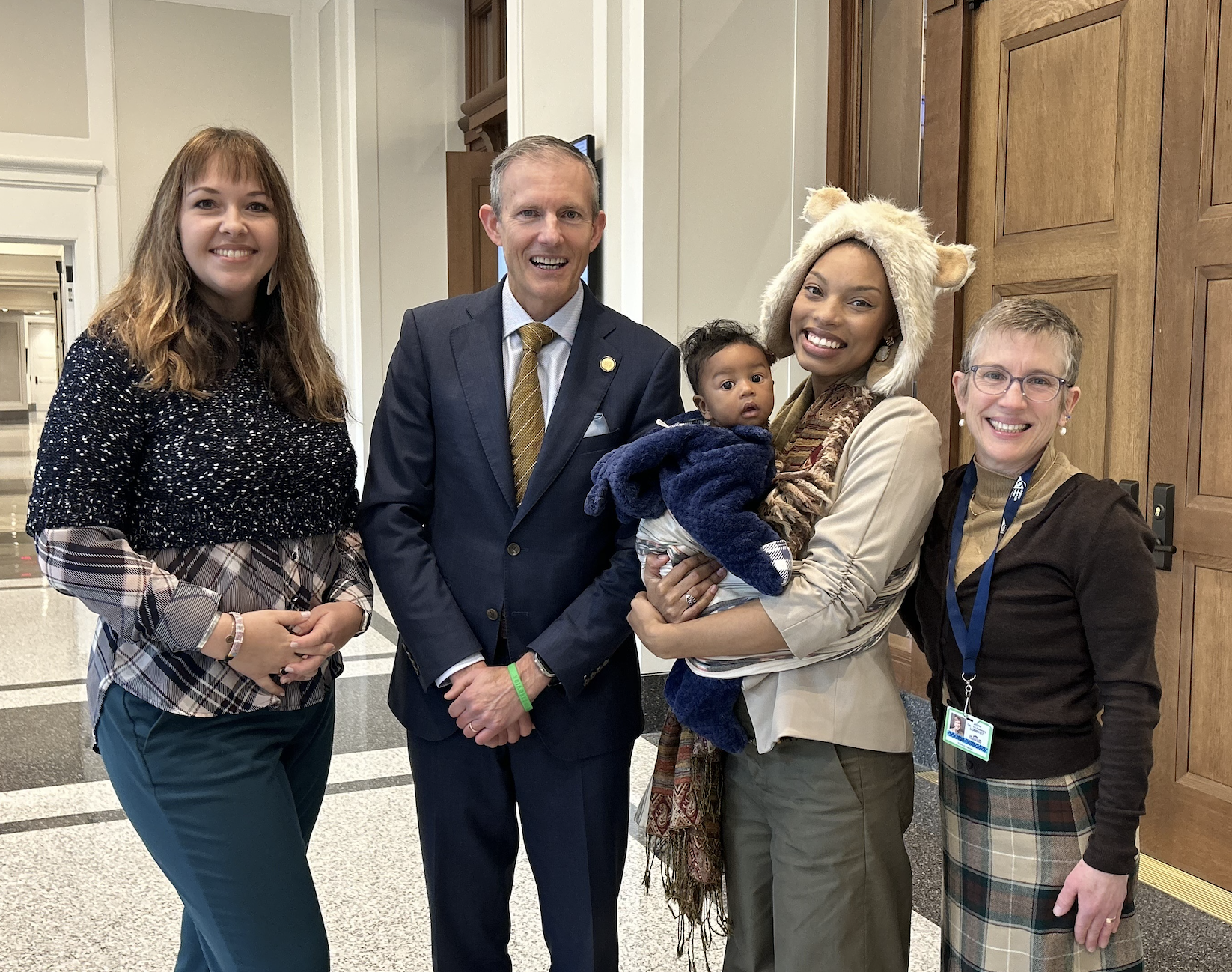
PHOTO: Ater testifying at General Assembly hearing, Jan. 23, 2025: From left: Katie Page, certified nurse-midwife; Delegate Rodney Willett; Roshay Richardson; Kathryn Haines, VA Interfaith Center’s health equity manager
Roshay immediately started texting her “mamas” with approaching due dates. “I’m texting them, updating them,” she said. “Look, I’m just letting you know, this is what’s going on. These are your options. You know, this is considered an emergency, so even though your Medicaid is in Virginia, if you go to North Carolina, they should still take it.”
Only after ensuring her mamas had the information they needed, did Roshay’s thoughts turn to herself. At the time that threats of hospital closures were a rapidly growing concern, Roshay was pregnant with her second biological child and planning a home birth with a certified professional midwife. In the event of complications, Sovah Danville Hospital would have been five minutes from her house. If it had been closed, the nearest hospital was not in Virginia – it would have been 30 minutes away—in North Carolina. Because practicing as a certified professional midwife is illegal in North Carolina, Roshay’s midwife would have been at risk of arrest had she accompanied Roshay to provide maternity care en route to North Carolina.
During the temporary labor and delivery closure at the Danville Hospital in November, Kathryn Haines, a formerly licensed midwife and VICPP’s senior advocate on this issue, began fielding frantic calls from midwives and maternal health advocates from the Danville area. VICPP is a nonprofit, nonpartisan organization whose mission is to engage people of faith and goodwill to advocate for economic, racial, and social justice in Virginia’s policies through education, prayer, and action. In 2019, VICPP launched the PUSH Coalition, uniting over 40 organizations and faith leaders across Virginia to push for legislation to address maternal health inequities.
Like Roshay, almost everyone contacting Kathryn was concerned about the impact of hospital closures on pregnant mamas, especially those on Medicaid. While North Carolina hospitals must accept Virginia Medicaid in emergencies, midwives are trained to transfer patients at the early signs of complications, before emergencies develop. If they followed this best practice, they risked hospitals not accepting their clients’ Medicaid coverage.
Working with Katie Page, a nurse-midwife at Centra Farmville and Virginia Chapter of the American College of Nurse-Midwives legislative representative, Kathryn quickly identified the section of the Virginia Administrative Code that needed to be changed. Unlike many other problems facing rural hospitals, this had a clear legislative solution: they needed to rewrite the Code to allow qualified midwives and pediatric nurse practitioners to provide nursery coverage when no physician was available. VICPP could draft the bill, but they needed a delegate to champion it.
As Chair of the House Select Committee on Rural and Small Town Health Care, Del. Rodney Willett (D-Henrico, 58th District) knew firsthand about maternal health deserts and staffing difficulties facing rural hospitals. Between 2018 and 2024, six rural labor and delivery units in Virginia had closed. He had also toured a hospital that had successfully integrated midwives into its labor and delivery unit.
Kathryn and Katie approached Delegate Willett at a Virginia Rural Health Association conference in November. Kathryn recalled, “I grabbed Katie and said, ‘Let’s corner him. Come on.’ So, we approached Delegate Willett and said, ‘We would like you to carry a bill to fix this problem,’ and he said, ‘yes, I should be able to do that.’” Kathryn said his quick response can be attributed to trust, “Delegate Willett had worked previously with our team at Virginia Interfaith and with Katie Page. Trusted relationships are at the core of our work.”
State Sen. Christopher Head (R, 3rd District) signed on as a co-patron, making it very clear that this was not a partisan issue. Kathryn wanted to make clear that HB 1904 was not a hospital, doctor, or midwife bill, but a mom and babies bill. She asked Roshay if she would testify. Though she was nervous and disliked public speaking, Roshay agreed to testify before the subcommittee.
On the morning of January 23, Roshay traveled three hours with her infant son, August, to the General Assembly. With August sleeping in her arms, Roshay ended her testimony by pleading directly with the legislators to vote for the bill, asking them to help herself and “future moms and all the moms currently pregnant” ensure that, “The last thing they have to worry about is…where am I going to birth my baby if my hospital closes.”
Roshay’s plea worked. HB 1904 passed unanimously out of committee with an 8-0 vote. Governor Glenn Youngkin signed the directive into law on March 24, 2025.
“Carrying this bill was about ensuring that expecting mothers can receive reliable, quality care close to home,” Del. Willett said. “This progress wouldn’t have been possible without the support of advocates, lobbyists, everyday mothers who shared their stories, and the Momnibus, a package of maternal health bills aimed at improving maternal health outcomes in the state. I’m incredibly grateful to the midwives and mothers who stepped up, engaged in the process, and brought their lived experiences to the General Assembly. Their voices were instrumental in securing the success of this legislation.”
Kathryn’s instincts were right. Encouraging Roshay to share her story had made the difference. Kathryn hopes Roshay’s testimony will inspire future advocates.
Advocacy Isn’t Just for Experts
Asked what she would say to any potential advocate, Roshay replied, “People need to know they have more power than they give themselves credit for. Me, personally, I did not think that anybody would have any interest in what I was saying. I’m finding more and more that that’s not true. The people that are in positions of power that are making decisions on our behalf aren’t as close to the problems as we are, so chances are they do not have the solutions that we do.”
Roshay believes, “Showing up is usually just enough. And it doesn’t necessarily mean driving to the Capitol at four o’clock in the morning. Sometimes it just looks like signing the petition of your neighbor who is running for city council or signing a petition. You don’t have to do a lot. There are many ways to advocate. I think more people need to understand that they can do that.”
The work is not yet over. Kathryn recently learned that HB 1904 will not go into effect on July 1, 2025, because it has to go through a regulatory process and that can take up to two years. Kathryn and her advocacy partners are following the process to ensure that it is implemented as soon as possible. In the meantime, she believes that stories like Roshay’s are an essential tool to help expedite the regulatory process.
Kathryn says, “Most people think I could never publicly advocate, and I tell them, ‘You absolutely can.’ And Virginia Interfaith is happy to sit down with you, coach you and provide whatever you need so that you find your voice and realize that you can be the person who leads a bill to a unanimous vote.”
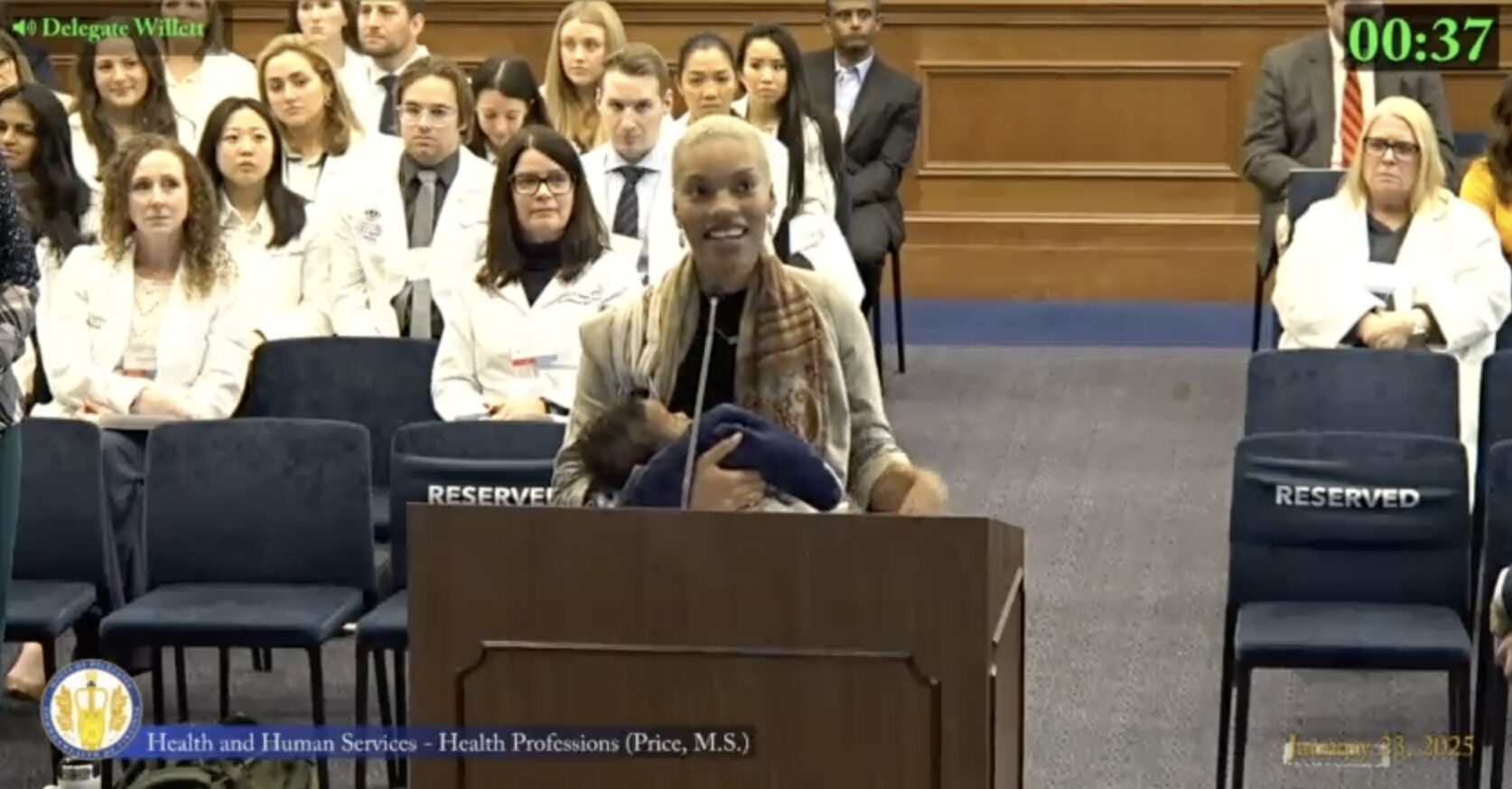
LINK: Video of Roshay Richardson’s testimony
*Karin Boxer is a former philosophy professor and disability advocate whose work centers on ethics, social justice, and institutional transformation. She is the author of Rethinking Responsibility (Oxford University Press, 2013) and “A Call for True Workplace Accommodations” (Disability Belongs/RespectAbility, 2024). Her recent article in Medium is entitled “Ableism Nearly Killed Me — Recognizing It Saved My Life.”